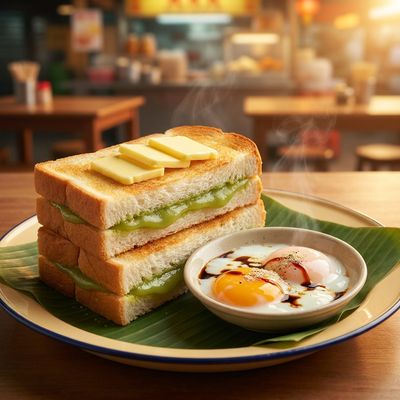
Kuih and Desserts
Authentic Singaporean Pandan Kaya Recipe
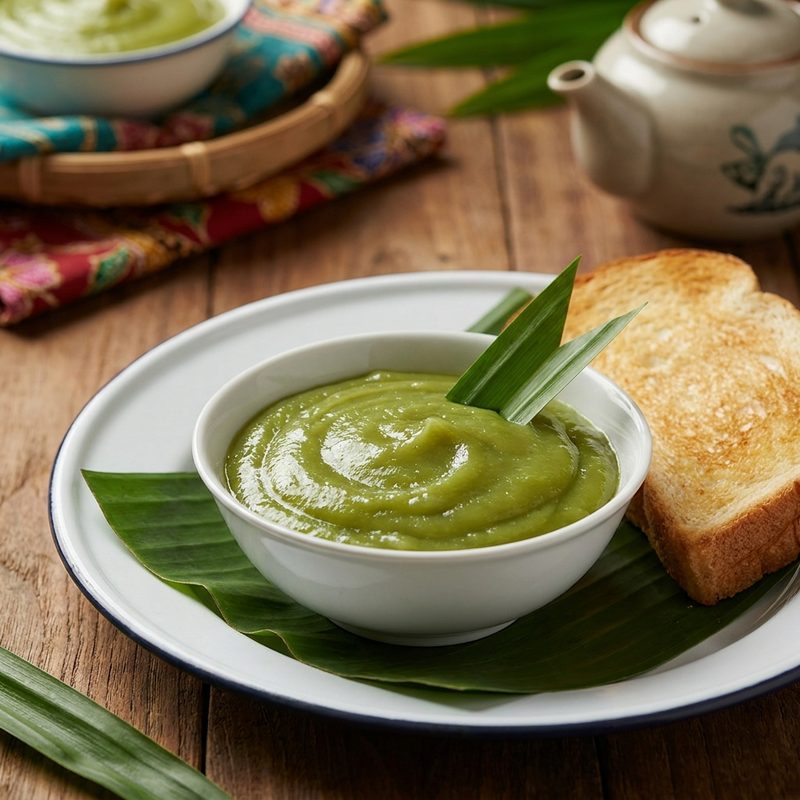
Experience the soul of a Singaporean breakfast with this rich, velvety Pandan Kaya. Hand-stirred over a gentle flame, this coconut jam blends creamy fresh santan with the floral essence of pandan leaves for the ultimate nostalgic spread.
- Prep
- 15 min
- Cook
- 60 min
- Serves
- 4
- Level
- Medium
- Per serving
- 450 kcal
Method
Wash the pandan leaves and tie 4 of them into a knot. Cut the remaining 4 leaves into small pieces and blend them with 2 tablespoons of the coconut milk. Strain through a fine muslin cloth to extract the concentrated green juice; discard the pulp.
In a large heat-proof mixing bowl, whisk the eggs and sugar together until the sugar is mostly dissolved. Do not over-beat; you want to avoid creating too many air bubbles.
Stir in the remaining coconut milk, the concentrated pandan juice, and the pinch of salt until well combined.
Set up a double boiler (bain-marie) by placing the bowl over a pot of gently simmering water. Ensure the bottom of the bowl does not touch the water.
Add the knotted pandan leaves into the mixture. This acts as the aromatic base, slowly infusing the custard much like a sweet rempah builds depth in savory dishes.
Stir the mixture continuously with a spatula or whisk for approximately 50 to 60 minutes. The heat must remain very low to ensure a silky texture without curdling the eggs.
The kaya is ready when it thickens to a custard-like consistency that coats the back of a spoon. It will thicken further as it cools.
Remove the knotted pandan leaves. If you prefer an extra-fine texture, you can run the finished jam through a fine-mesh sieve or give it a quick pulse with an immersion blender while warm.
Transfer to sterilized glass jars and allow to cool completely before refrigerating.
Notes
Patience is essential; high heat will cause the eggs to scramble, resulting in a lumpy jam.
Use fresh santan (coconut milk) from the wet market if possible for the best fat content and aroma.
For a deeper caramel color (Hainanese style), you can caramelize two tablespoons of the sugar separately before adding it to the mixture.
Always use a double boiler to provide the indirect, gentle heat required for the proteins to set smoothly.