Hawker Classics

Authentic Singaporean Chwee Kueh Recipe

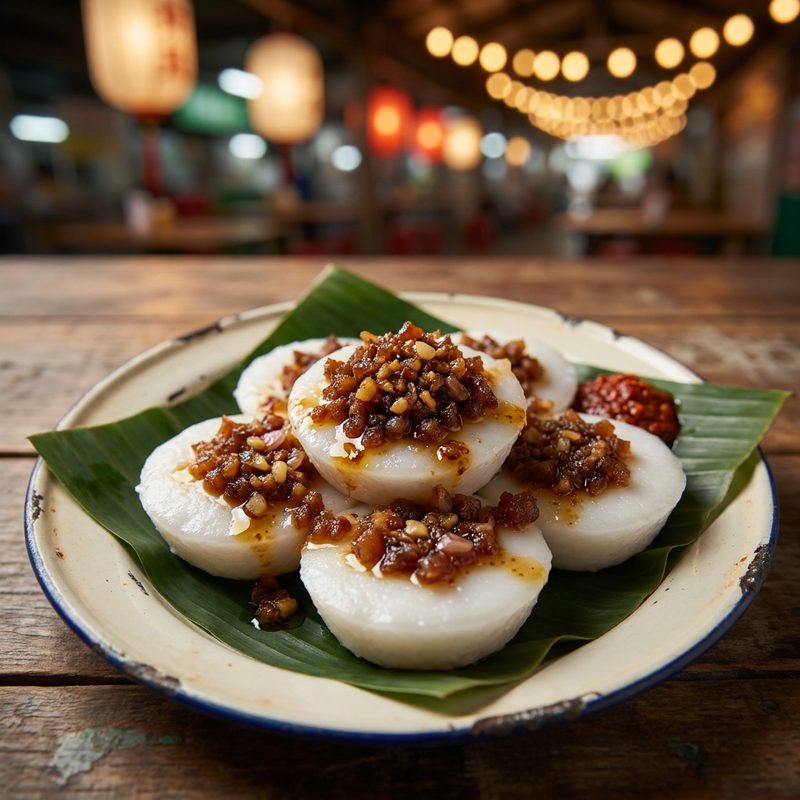
These melt-in-your-mouth steamed rice cakes are topped with a fragrant, savory mound of slow-cooked preserved radish known as cai poh. A quintessential Singaporean breakfast staple, they are perfectly balanced by a dollop of spicy dried shrimp sambal and aromatic shallot oil.
Chwee Kueh
Prep
20 min
Cook
40 min
Serves
4
Level
Medium
Per serving
320 kcal

Method

  1. Prepare the cai poh topping by soaking the minced preserved radish in water for 10 minutes to remove excess salt, then drain and squeeze dry. Heat 100ml of oil or lard in a pan and fry the minced shallots and garlic until fragrant.

  2. Add the drained radish to the pan and cook over low heat for 20-30 minutes until the radish becomes dark and caramelized. Stir in the sugar and dark soy sauce, then set aside.

  3. For the rice cakes, whisk the rice flour, wheat starch, corn starch, and salt with the 250ml of cold water until smooth. Slowly pour in the 300ml of boiling water while whisking constantly to slightly thicken the batter.

  4. Prepare your chwee kueh moulds by greasing them lightly and placing them in a steamer for 5 minutes to pre-heat. Stir the batter well before pouring it into the hot moulds until nearly full.

  5. Steam the cakes over high heat for 15-18 minutes. Remove from the steamer and let them cool for at least 10 minutes; they will firm up as they cool.

  6. Use a small spatula or butter knife to unmould the cakes. Top generously with the warm cai poh mixture and serve with a side of sambal belacan.

Notes

Always stir the batter before pouring it into the moulds as the rice flour tends to settle at the bottom.

Pre-heating the moulds is essential to ensure the rice cakes develop a slight 'dimple' in the center for the topping to sit in.

Slow-frying the radish in plenty of oil is the secret to a fragrant, tender topping; don't rush this process.

Using a mix of sweet and salty preserved radish provides a more complex and balanced flavor profile.
Questions

Can I use ramekins if I don't have traditional metal moulds?
Yes, small ceramic ramekins or silicone muffin cups work well as substitutes, though the texture and shape may vary slightly.
Why are my rice cakes too soft or sticky?
The cakes need time to rest. They are very soft when immediately out of the steamer but firm up into a silky texture after cooling for about 10-15 minutes.
How long can I keep the cai poh topping?
The fried radish topping can be stored in an airtight container in the fridge for up to two weeks. It actually tastes better after a few days.
Is there a substitute for wheat starch?
Wheat starch is used to give the cakes a translucent and bouncy texture. You can use tapioca starch as a substitute, but the result will be slightly more chewy.

Try this next

Rojak

Hawker Classics

Rojak

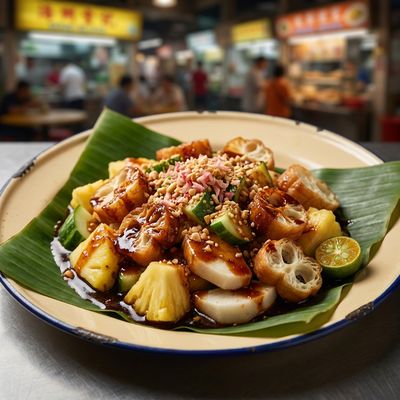
A vibrant medley of crisp fruits and vegetables tossed in a thick, umami-rich fermented...

Wok Hei at Home

Singapore Food Guides

Wok Hei at Home

Unlock the elusive 'breath of the wok' in your own kitchen. This guide teaches home cooks...

Bak Kut Teh

Hawker Classics

Bak Kut Teh

This soul-warming Teochew-style Bak Kut Teh features a clear, intensely peppery broth that...

Nasi Lemak

Hawker Classics

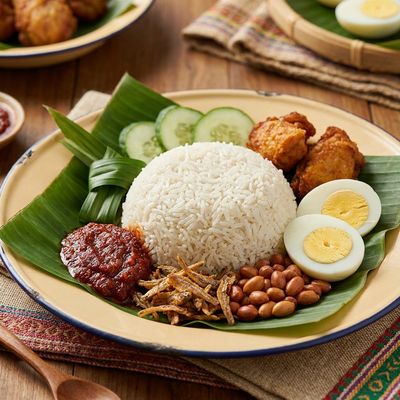
Nasi Lemak

Experience the quintessential Singaporean breakfast with this fragrant coconut milk rice,...

Chendol

Kuih and Desserts

Chendol

A quintessential Singaporean treat, this Chendol features silky, handmade pandan-flavored...

More from Singapore Food

Otah Otah

Snacks and Sides

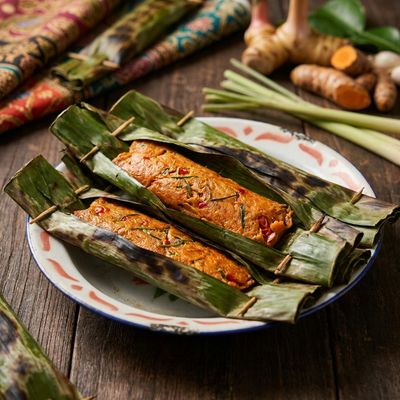
Otah Otah

Otah Otah is a beloved Singaporean classic, featuring a fragrant, spicy fish paste infused...

Kopi and Kopi O

Drinks

Kopi and Kopi O

Experience the bold, buttery aroma of authentic Singaporean Nanyang coffee right in your...

Hainanese Chicken Rice

Hawker Classics

Hainanese Chicken Rice

Experience the national dish of Singapore with succulent, ginger-poached chicken and jasmine...

Claypot Rice

Rice Dishes

Claypot Rice

Indulge in the soulful comfort of a hawker classic featuring fragrant jasmine rice,...