Hawker Classics
Traditional Singaporean Nasi Lemak Recipe with Fragrant Coconut Rice
Experience the quintessential Singaporean breakfast with this fragrant coconut milk rice, infused with pandan and served with a rich, slow-cooked sambal tumis. This home-style version balances creamy rice with crunchy ikan bilis and the heat of a hand-ground rempah for a truly soul-warming meal.
- Prep
- 20 min
- Cook
- 40 min
- Serves
- 4
- Level
- Intermediate
- Per serving
- 720 kcal
Method
Rinse the jasmine rice until the water runs clear. In a rice cooker, combine rice, coconut milk, water (adjust total liquid to your usual rice-to-water ratio), ginger slices, a pinch of salt, and knotted pandan leaves. Cook on the normal setting.
Prepare the rempah for the sambal by blending the soaked dried chilies, shallots, garlic, and belacan into a smooth paste. Use a little oil or water to help the blades move if necessary.
Heat 4 tablespoons of oil in a pan over medium-low heat. Sauté the rempah paste slowly for 15-20 minutes until the oil separates (pecah minyak) and the paste darkens. Season with tamarind juice, sugar, and salt to taste. Set aside.
In a separate skillet, fry the peanuts in a little oil until toasted and crunchy. Remove and drain. In the same oil, fry the ikan bilis until golden brown and crispy.
Once the rice is cooked, fluff it gently with a fork to distribute the coconut oils and aroma of the pandan.
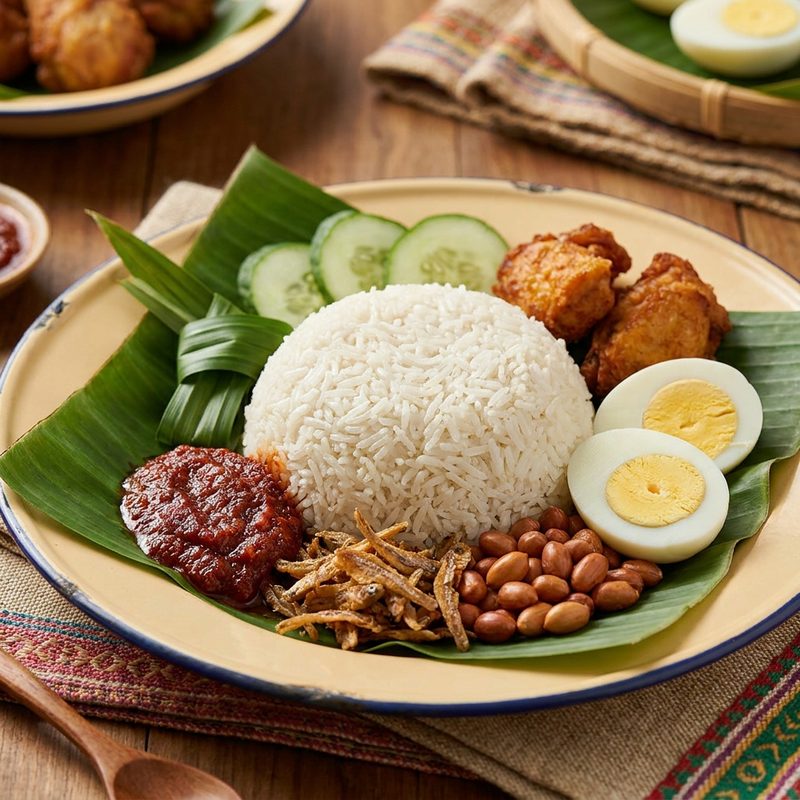
Assemble the plate by placing a mound of coconut rice in the center, flanked by a generous spoonful of sambal, a portion of fried ikan bilis and peanuts, hard-boiled egg halves, and fresh cucumber slices.
Notes
For the fluffiest rice, use 'old' jasmine rice which has a lower moisture content than new crop rice.
The secret to a good sambal is 'pecah minyak'—be patient and wait for the oil to rise to the surface of the paste during frying.
Tying the pandan leaves in a knot and bruising the ginger helps release the essential oils more effectively during the steaming process.
To keep ikan bilis extra crispy, ensure they are completely dry before frying and store them in an airtight container if not serving immediately.