Curries and Sambal
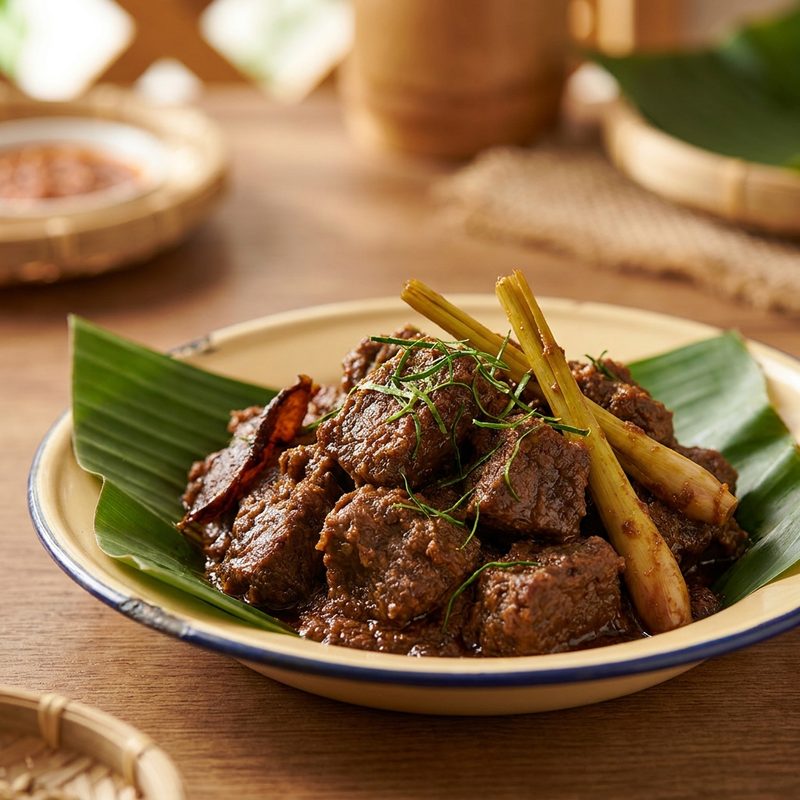
Authentic Singaporean Beef Rendang Recipe (Rendang Daging)
A labor of love, this Rendang Daging is a rich, fragrant, and deeply caramelized dry curry that defines Singaporean and Malay festive cooking. The beef is slow-cooked until it absorbs the complex flavors of the rempah spice paste and the nutty sweetness of kerisik.
- Prep
- 45 min
- Cook
- 180 min
- Serves
- 6
- Level
- Advanced
- Per serving
- 550 kcal
Method
Prepare the rempah: Blend the soaked dried chillies, shallots, galangal, turmeric, and ginger into a very smooth paste. Add a little oil to help the blending process if needed.
In a heavy-bottomed pot or wok, heat 4 tablespoons of oil over medium heat. Sauté the rempah paste and bruised lemongrass stalks until the oil separates (pecah minyak) and the paste turns a dark, deep red.
Add the beef chunks to the pot and stir well to coat every piece with the spice paste. Cook for 5 minutes until the beef is sealed.
Pour in the coconut milk and add the asam keping. Bring to a gentle boil, then lower the heat to a simmer. Cover the pot partially.
Simmer for about 2 to 2.5 hours, stirring occasionally. The liquid will slowly evaporate and the beef will soften.
Once the sauce has thickened significantly, add the kerisik, Gula Melaka, and salt to taste. Stir constantly now, as the lower liquid content makes it prone to burning.
Continue cooking until the sauce becomes a thick, dark brown paste that clings to the beef, and the oil starts to release from the mixture again (the 'dry' stage).
Stir in the shredded kaffir lime leaves just before turning off the heat. Serve with rice or ketupat.
Notes
Pecah minyak is the most important step; if you don't fry the rempah until the oil separates, the spices will taste raw.
Use beef chuck or shin rather than lean cuts; the fat and connective tissue are essential for a moist result after the long cooking time.
If you can't find kerisik at the market, make your own by toasting grated coconut in a dry pan until dark brown, then pounding it until it releases its oil.
Rendang always tastes better the next day after the flavors have fully matured.