Kuih and Desserts
Authentic Singaporean Ang Ku Kueh Recipe
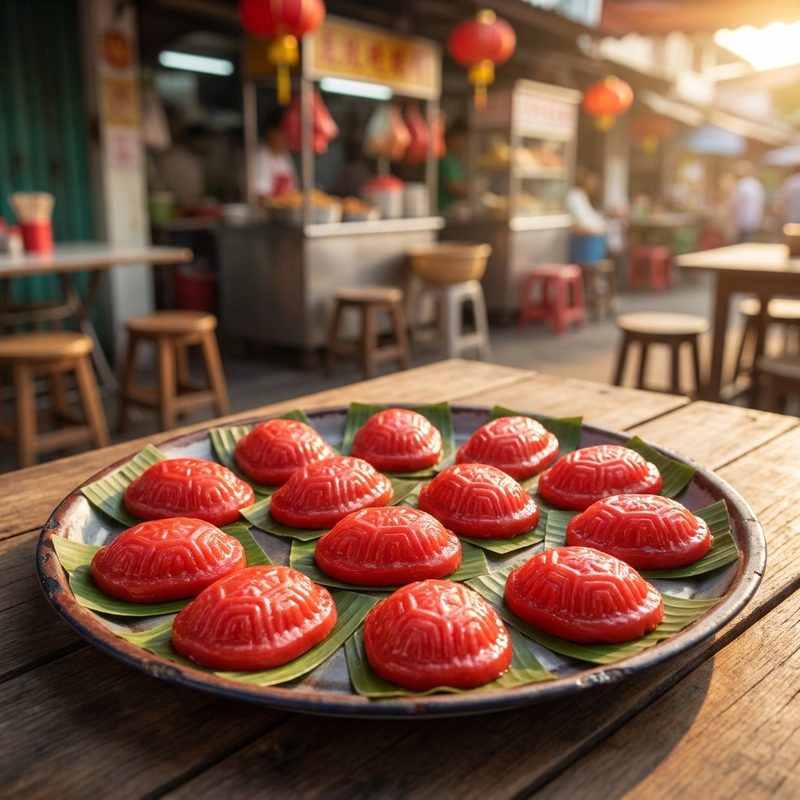
These iconic red tortoise-shaped cakes are a staple of Singaporean heritage, featuring a tender, chewy glutinous rice skin and a rich, sweet mung bean center. Perfectly balanced with the aroma of banana leaves and shallot oil, they symbolize longevity and prosperity in every bite.
- Prep
- 60 min
- Cook
- 45 min
- Serves
- 12
- Level
- Intermediate
- Per serving
- 185 kcal
Method
Prepare the filling: Drain soaked mung beans and steam with pandan leaves for 30 minutes until soft. Blend the beans into a smooth paste while warm.
Heat 2 tablespoons of shallot oil in a pan over medium-low heat. Add bean paste and 100g sugar. Stir constantly until the paste thickens and leaves the sides of the pan. Let cool and roll into 12 equal-sized balls.
Prepare the dough: In a large bowl, mix glutinous rice flour and mashed sweet potato. Dissolve red coloring in hot water and gradually pour into the flour mixture.
Add 1 tablespoon of shallot oil and knead until a smooth, pliable dough forms. If too dry, add a teaspoon of water at a time.
Assembly: Divide dough into 12 portions. Flatten a piece of dough, place a filling ball in the center, and wrap the dough around it, sealing tightly.
Lightly dust an Ang Ku Kueh mold with glutinous rice flour. Press the dough ball into the mold, then gently tap the mold on the counter to release the cake.
Place each cake on a lightly greased banana leaf. Steam on low-medium heat for 8 to 10 minutes. Opening the lid every 3 minutes briefly helps prevent the pattern from blurring.
Once cooked, brush the tops with a little shallot oil while hot to keep them glossy and soft.
Notes
Using steamed sweet potato in the dough is the secret to a skin that stays soft even after the kueh has cooled down.
Do not steam on high heat; the expanding steam will cause the kueh to lose its intricate tortoise shell design.
Always grease the banana leaves and the finished kueh with shallot oil for that authentic local fragrance.
If you don't have a mold, you can shape them into rounds, though they won't have the traditional tortoise pattern.