Guide
How to Achieve Authentic Wok Hei in Your Home Kitchen
Unlock the elusive 'breath of the wok' in your own kitchen. This guide teaches home cooks how to replicate restaurant-quality smokiness in iconic Singaporean dishes using standard domestic equipment.
Select Your Weapon: Carbon Steel is King
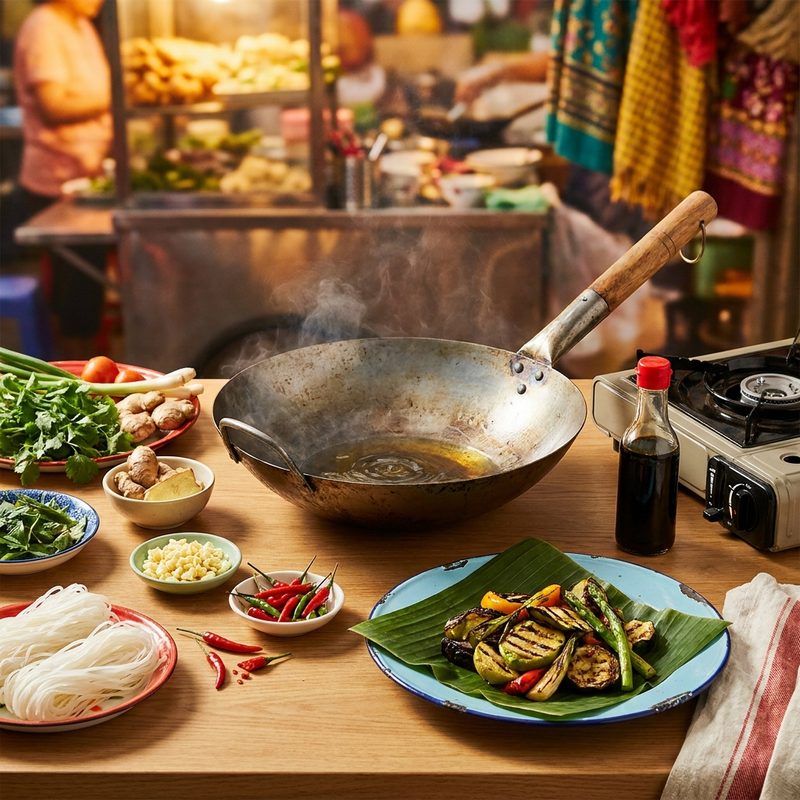
To achieve Wok Hei (the breath of the wok), heat retention and conductivity are paramount. Most Singaporean households use non-stick pans for convenience, but these are unsuitable for the extreme temperatures required. Invest in a seasoned carbon steel wok. Unlike stainless steel, carbon steel develops a patina that allows oil to polymerize, contributing to that distinctive smoky aroma without the food sticking.
Prepare Your Ingredients and Rempah
Wok Hei happens in seconds, not minutes. You must have your 'mise en place' ready. If you are making Sambal Kang Kong, ensure your sambal belacan (shrimp paste chili) is within reach. For Char Kway Teow, have your lup cheong (Chinese sausage), hum (cockles), and light/dark soy sauce mixture prepared. Most importantly, ensure your ingredients—especially noodles and vegetables—are as dry as possible. Excess moisture leads to steaming, which is the enemy of Wok Hei.
The Small Batch Rule
A common mistake in home cooking is overcrowding the wok. Domestic gas stoves have significantly lower BTU (heat output) than commercial dragon burners. To maintain high heat, cook in small portions. If you are making Seafood White Bee Hoon for four people, cook it in two or three batches. This ensures the wok temperature doesn't plummet when the ingredients hit the metal.
The 'Long Yao' Technique
Before adding your ingredients, heat the wok until it begins to smoke. Perform 'Long Yao': swirl a generous amount of oil to coat the surface, then pour out the excess (or move it to the side). This creates a slick, non-stick surface. Add your aromatics like minced garlic or your rempah. The goal is to flash-fry. When you add the noodles or rice, leave them untouched for 15-20 seconds to allow for slight charring before you start tossing.
Controlled Caramelization
The smoky flavor comes from the Maillard reaction and the partial combustion of oil droplets in the air. While we cannot always toss the food through an open flame at home, you can replicate this by drizzling your soy sauce or fish sauce around the scorching hot edges of the wok rather than directly onto the food. The sauce will caramelize and 'singe' instantly, infusing the dish with a deep, smoky fragrance.