Drinks

Authentic Singaporean Nanyang Coffee (Kopi and Kopi O)

Experience the bold, buttery aroma of authentic Singaporean Nanyang coffee right in your kitchen. Whether you prefer it black and sweet (Kopi O) or creamy with condensed milk (Kopi), this guide brings the kopitiam soul to your breakfast table using simple home techniques.
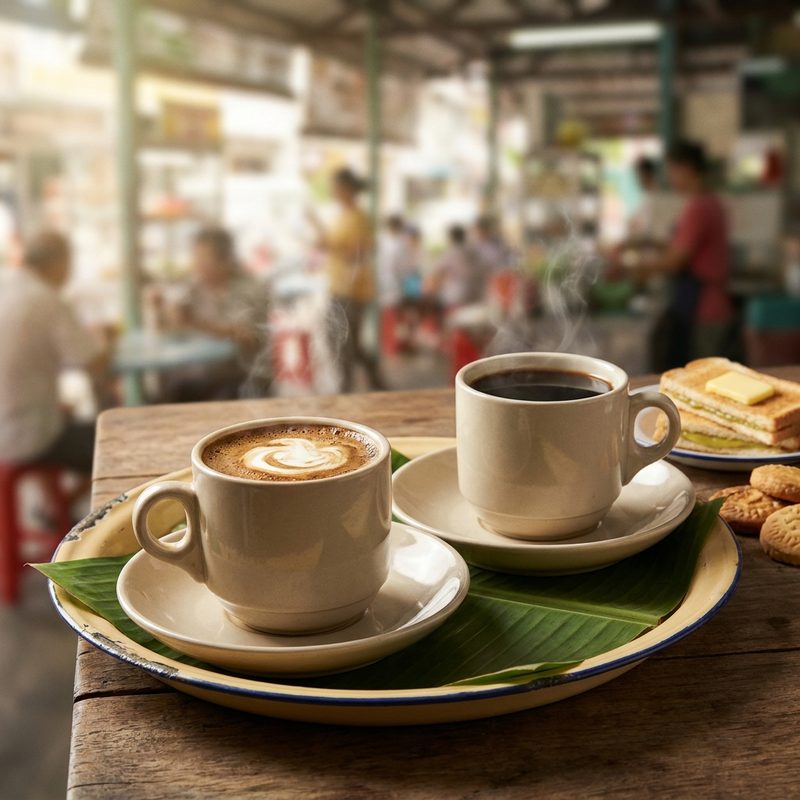
Kopi and Kopi O
Prep
5 min
Cook
10 min
Serves
2
Level
Easy
Per serving
125 kcal

Method

  1. Preheat your coffee pot and ceramic cups by rinsing them with boiling water. This is essential to maintain the high temperature required for the coffee extraction.

  2. Place the Nanyang coffee powder into a cloth coffee sock (filter bag). Place the sock inside a deep pitcher or coffee pot.

  3. Pour 500ml of boiling water (approximately 95°C) directly onto the powder inside the sock. Use a long spoon to stir the grounds within the sock to ensure all powder is saturated.

  4. Let the coffee steep for 3 to 5 minutes. The longer it steeps, the 'gao' (stronger) the brew will be.

  5. Lift the coffee sock and allow the liquid to drain completely. For a smoother, more aerated finish, pour the coffee through the sock into another pitcher 2-3 times—this is known as 'pulling'.

  6. To assemble Kopi: Place 1 tablespoon of condensed milk and 1/2 tablespoon of evaporated milk into a cup. Pour the hot brewed coffee over the milk and stir vigorously.

  7. To assemble Kopi O: Place 1-2 teaspoons of sugar in a cup. Pour the hot brewed coffee over the sugar and stir until fully dissolved.

Notes

Use Nanyang-style coffee powder specifically, as it is roasted with margarine and sugar to create the unique caramelized, smoky profile found in Singapore.

For a 'Kopi C' version, use evaporated milk and sugar instead of condensed milk.

Always store your coffee powder in an airtight container in a cool, dark place to keep the oils from going rancid.

If the coffee is too strong, you can 'po' (thin) it with a little extra hot water after brewing.
Questions

What does 'Siew Dai' and 'Ga Dai' mean?
Siew Dai means 'less sweet' (less condensed milk/sugar), while Ga Dai means 'more sweet'.
Can I use a French Press instead of a coffee sock?
Yes, you can use a French Press for convenience, but the traditional cloth sock provides a specific clarity and body unique to kopitiam coffee.
What is the difference between Kopi and Kopi O?
Kopi is brewed coffee served with condensed milk and evaporated milk. Kopi O is black coffee served with sugar only.
What is Kopi Kosong?
Kopi Kosong is black coffee served without any sugar or milk.

Try this next

Chendol

Kuih and Desserts

Chendol

A quintessential Singaporean treat, this Chendol features silky, handmade pandan-flavored...

Singapore Pantry Essentials

Singapore Food Guides

Singapore Pantry Essentials

Transform your kitchen into a Singaporean home base with these must-have pantry staples....

Char Kway Teow

Noodle Dishes

Char Kway Teow

Experience the smoky, savory-sweet magic of a Singapore hawker staple right in your kitchen....

Claypot Rice

Rice Dishes

Claypot Rice

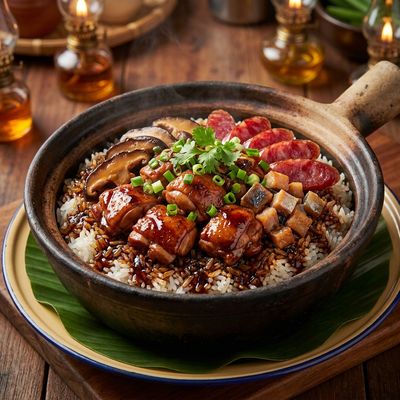
Indulge in the soulful comfort of a hawker classic featuring fragrant jasmine rice,...

More from Singapore Food

Rojak

Hawker Classics

Rojak

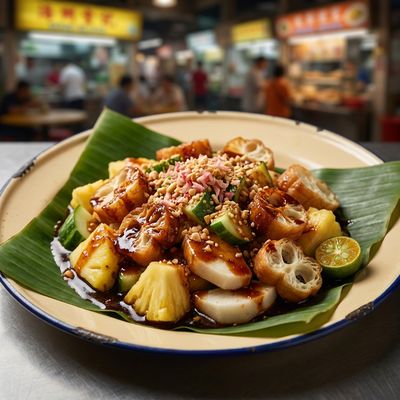
A vibrant medley of crisp fruits and vegetables tossed in a thick, umami-rich fermented...

Popiah

Hawker Classics

Popiah

Experience a true hawker classic at home with this authentic Popiah recipe, featuring a...

Otah Otah

Snacks and Sides

Otah Otah

Otah Otah is a beloved Singaporean classic, featuring a fragrant, spicy fish paste infused...

Oyster Omelette (Orh Luak)

Hawker Classics

Oyster Omelette (Orh Luak)

Orh Luak is a beloved Singaporean hawker staple defined by its addictive contrast of...

Nasi Lemak

Hawker Classics

Nasi Lemak

Experience the quintessential Singaporean breakfast with this fragrant coconut milk rice,...

Hainanese Chicken Rice

Hawker Classics

Hainanese Chicken Rice

Experience the national dish of Singapore with succulent, ginger-poached chicken and jasmine...

Bak Kut Teh

Hawker Classics

Bak Kut Teh

This soul-warming Teochew-style Bak Kut Teh features a clear, intensely peppery broth that...