Guide
A Home Cook's Guide to Pandan, Gula Melaka, and Authentic Kaya
Unlock the secrets of Singaporean desserts by mastering the three essential pillars of local flavor: Pandan, Gula Melaka, and Kaya. This guide focuses on the specific techniques needed to handle these ingredients with the precision of a seasoned home cook.
Step 1: Extracting Concentrated Pandan Juice
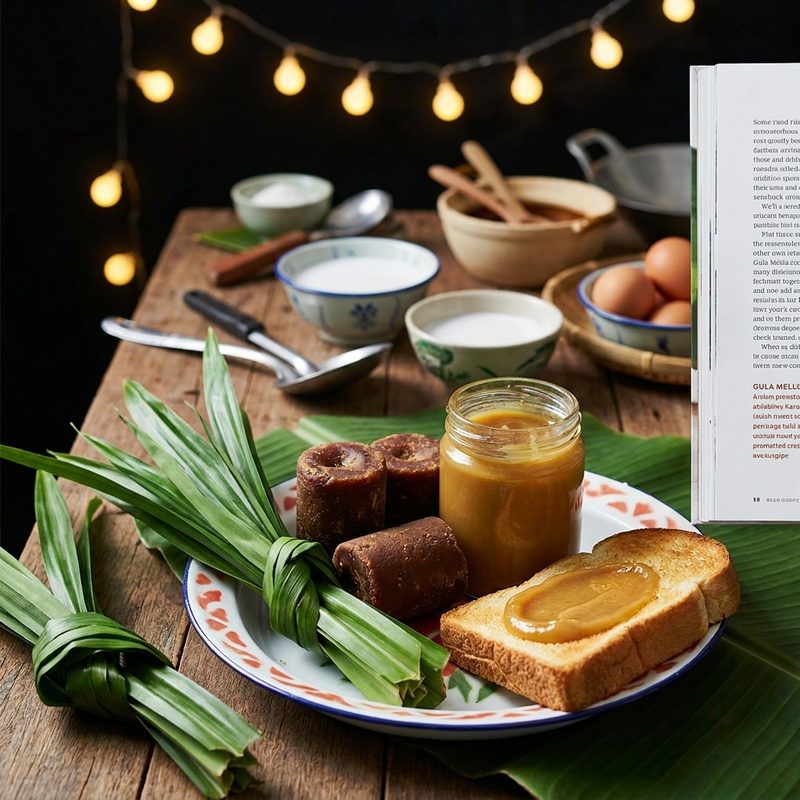
Start with fresh Pandan leaves, easily found at any local wet market or supermarket. Wash about 10-15 leaves thoroughly to remove grit. Use scissors to snip them into 1-inch pieces. Place them in a blender with just enough water to allow the blades to turn—too much water will dilute the flavor. Once blended into a fine pulp, pour the mixture into a muslin cloth or a fine-mesh strainer and squeeze every drop of liquid out. For the best result, leave this juice in a glass jar in the fridge overnight. The dark green 'essence' will settle at the bottom; discard the clear water on top to get a professional-grade natural extract.
Step 2: Preparing Gula Melaka Syrup
Authentic Gula Melaka should be soft and dark, not rock-hard and pale. To prepare it for cooking, use a sharp knife to shave the block into thin shards; this ensures it melts evenly without burning. Place the shavings in a small saucepan with a splash of water and a knotted Pandan leaf. Melt over low heat until it forms a thick, glossy syrup. Always strain your melted Gula Melaka through a sieve, as traditional production methods often leave small bits of coconut husk or debris in the sugar blocks.
Step 3: The Slow-Stir Technique for Silky Kaya
Making Kaya (coconut egg jam) is a lesson in patience. Whisk together fresh coconut milk (Santan), duck or chicken eggs, and white sugar. Place the mixture in a double boiler (a bowl over a pot of simmering water) to ensure gentle heat. Add a bundle of Pandan leaves for aroma. The secret is the 'slow stir'—using a wooden spoon to stir the mixture constantly for at least 45 to 60 minutes. This prevents the eggs from curdling into a scramble. If you want a deeper brown 'Kaya Coklat,' caramelize two tablespoons of sugar separately before whisking it into the main mixture mid-way through cooking.
Step 4: Incorporating Gula Melaka into Rempah
While often used in sweets, Gula Melaka is a secret weapon in savory Singaporean dishes. When frying a Sambal or a Rempah for Udang Pedas (Spicy Prawns), add a small tablespoon of shaved Gula Melaka toward the end of the frying process. The smoky, molasses-like sweetness balances the heat of the dried chilies and enhances the 'Lemak' (richness) of the dish far better than white sugar ever could.